
Learning model

Interactive wastewater treatment plant model

Explore the plant step by step — from the inlet to treated water returning to the river. Hover over individual components or play the guided sequence through the treatment stages.

Flow of water through a modern wastewater treatment plant

  1. Inflow from the collecting system: Wastewater arrives from the whole agglomeration.
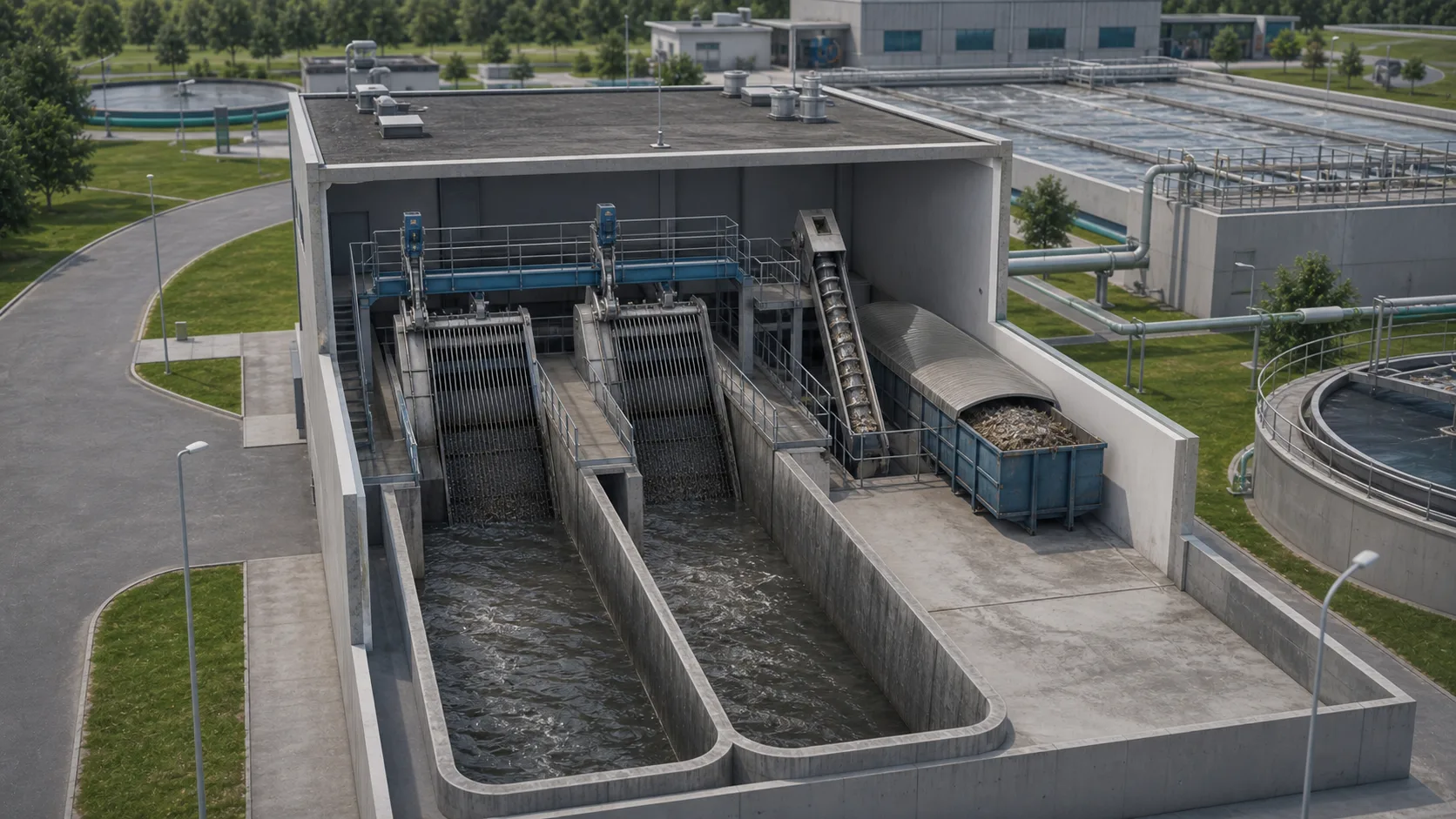
  2. Screens: Screens capture coarse material before it can damage equipment.
  3. Grit and grease chamber: Grit settles while grease is collected from the surface.
  4. Primary settling tank: Settleable solids form primary sludge.
  5. Activated-sludge tank: Microorganisms remove organic pollution and nitrogen.
  6. Blowers and aeration: Blowers supply oxygen through fine bubbles.
  7. Final settling tank: Biological sludge separates from clarified water.
  8. Return and excess sludge: Most sludge returns to aeration; excess sludge goes to treatment.
  9. Phosphorus precipitation: A reagent converts dissolved phosphorus into removable flocs.
  10. Filtration and polishing: Filters retain remaining solids and phosphorus-bearing flocs.
  11. Quaternary treatment: Advanced treatment removes pharmaceutical and cosmetic micropollutants.
  12. Outfall to the river: Treated water is monitored before returning to the receiving water.
Interactive process guide

From inlet to clean water and recovered energy

Select any stage or play the sequence. The model follows the main process line of a modern urban wastewater treatment plant.
Stage 1 of 11
Inlet and mechanically cleaned screens at a modern wastewater treatment plant
Mechanical pretreatment
01 · Screens

Inlet and mechanically cleaned screens

Screens capture coarse material before it can damage pumps and downstream equipment.

What happens here

Inlet and mechanically cleaned screens

Wastewater passes through bars. Screenings remain on the rack, are mechanically removed, washed and compacted, and then transferred to a closed container.